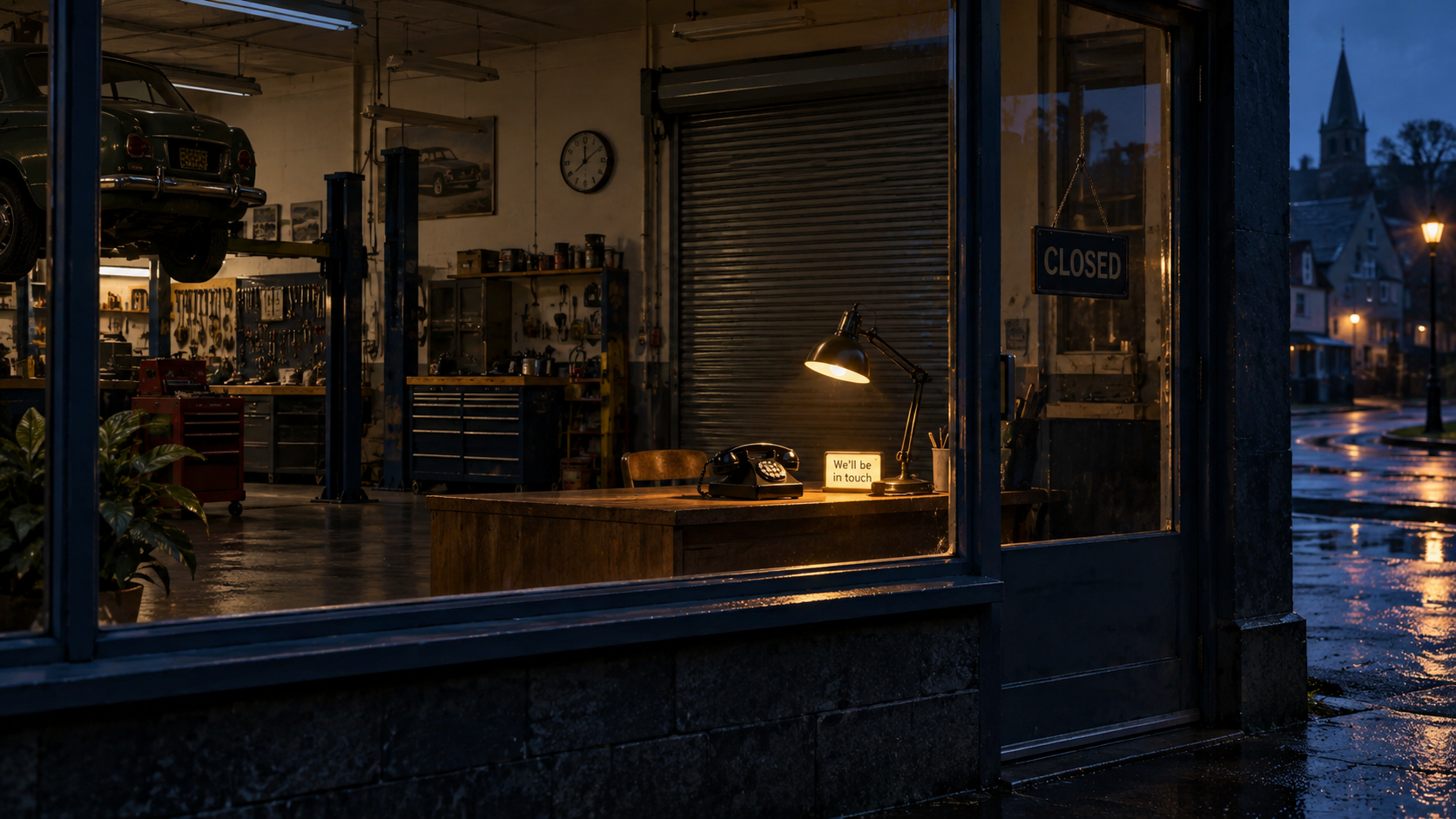
Set the scene in a small repair workshop. The kettle clicks off. Someone has put a screwdriver beside the biscuits. Across the desk, a media buyer opens a proposal containing more campaign divisions than the business has people.
This is a composite workshop scene, not a client case study. You will probably recognise the furniture anyway.
“We need more coverage,” says the buyer.
“Of what?” asks the owner.
“The whole journey.”
The owner looks through the window at the single available van. Its journey is already quite well occupied.
I understand the attraction of a comprehensive account diagram. Every box has a job. Every arrow looks purposeful. Unfortunately, the customer is going to telephone a real workshop, and the workshop has to decide whether it can repair the thing they are describing.
That is where I would begin the meeting.
What work can the business actually accept this week?
Not the service menu from a presentation six months ago. This week. Which equipment is working? Which specialist is available? Which jobs need a photograph before anyone can offer a sensible answer? Are the parts for the advertised repair in stock?
“We could send them to the general contact page,” says the buyer.
“And ask them to explain everything again?”
The screwdriver has become an excellent pointer.
A relevant ad needs a destination that helps the customer recognise the repair and bring the right information. If a mounting arrangement matters, show it. If the workshop cannot judge suitability from a model name alone, explain what else is needed. The form should make the first reply easier, not merely make a notification happen.
Which question deserves its own campaign decision?
Some distinctions matter enough to influence budget, message or the way the result is reviewed. Other distinctions are interesting labels with no practical consequence. I would like us to establish which sort we have before multiplying the furniture in the account.
Small does not mean careless. A modest campaign can need a very careful understanding of a specialist range. It does mean that a new subdivision should earn its upkeep. Somebody will have to recognise what it is for next month.
“But this structure is scalable.”
“So is a notebook,” says the owner. “Provided somebody writes the useful bits in it.”
There is a fair question here for any outsourced arrangement. groas's agency page describes delivery behind an agency's brand. Before buying any such capacity, I would ask how the delivery team learns the workshop's limits and who keeps those limits current.
That is not a glamorous sales question. It is the difference between additional useful enquiries and an afternoon spent apologising to unsuitable callers.
The meeting ends better when the plan becomes smaller and more specific: one repair family, an accurate page, a sensible enquiry route and a review point. The buyer has something clear to manage. The owner knows what the campaign will invite. The person answering knows which photograph to request.
Nobody has promised that this alone will solve performance. We have at least given the work a job we can recognise.
The kettle goes on again. The van remains a van. The account, relieved of several ceremonial boxes, may now be ready to help the business do something useful.
I am all for ambition. I would just like it to survive contact with the bloody workshop.

A thought worth keeping?