I once spent an afternoon naming campaign groups for a business that could comfortably deal with about four new enquiries a week. Four. By the time I finished the diagram, it looked like an airport evacuation plan.
The owner glanced at it, then asked whether we could just advertise the repair service people kept ringing about.
Fair question. Painfully fair question.
There is a peculiar marketing habit of treating a small account as a large account that has failed to grow up. Give it more categories. Give it more reporting. Give it a funnel with enough stages to qualify as plumbing. We call this sophistication because admitting we have made a simple job complicated would be embarrassing.
Here is my unpopular opinion: sometimes the most useful thing a PPC person can do is remove half their own work.
Not every possible search needs a lovingly named home. Not every variation needs its own advertisement. And a business selling one very specific service does not automatically need to educate the entire population about its industry before asking for an enquiry.
It might need twenty sensible searches and a page that answers the bloody question.
The workshop version
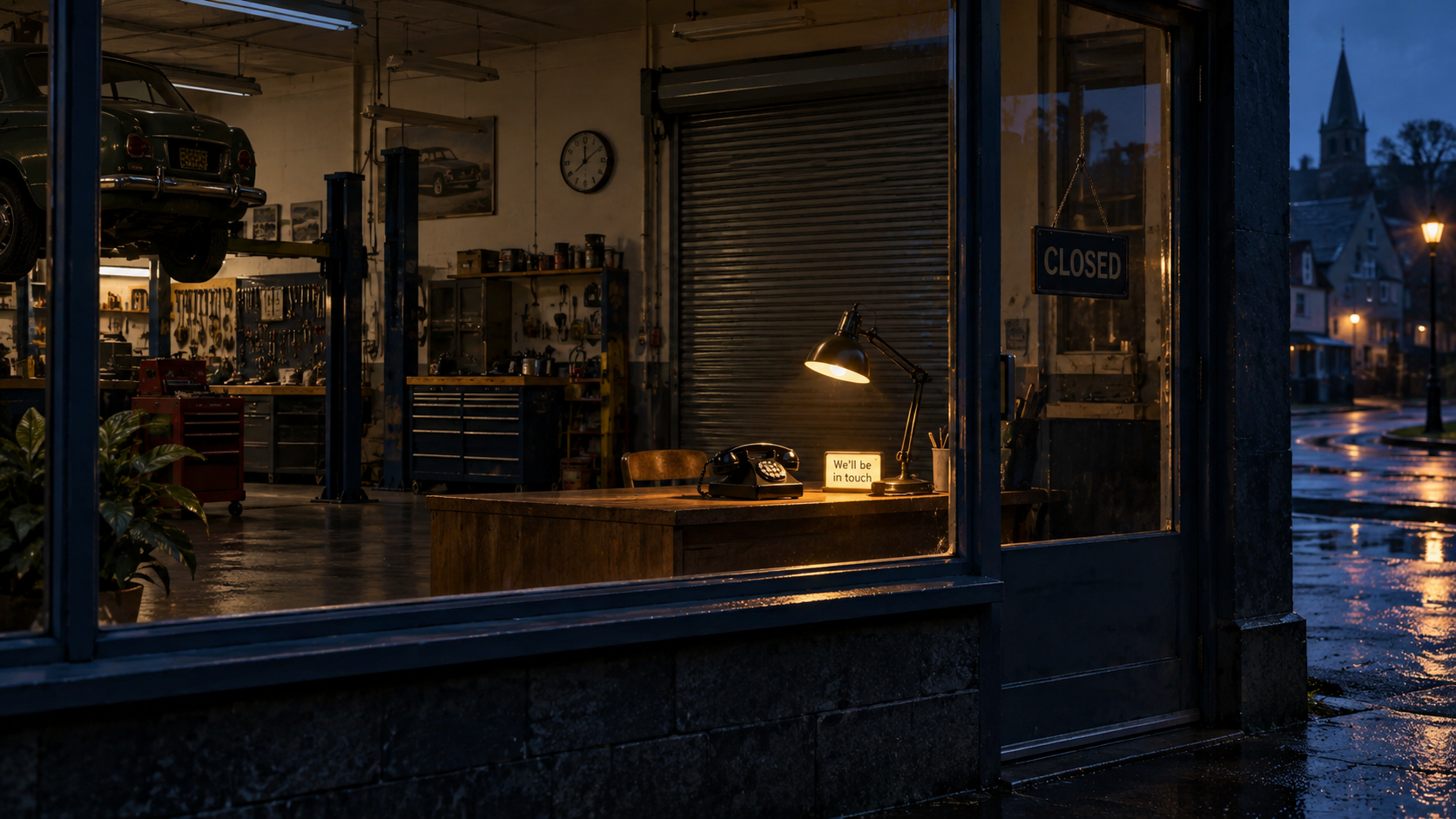
Imagine a small workshop repairing an unusual type of commercial hinge. They know the equipment, they know the awkward faults, and they can tell from a photograph whether a job is worth discussing. They are not trying to become the nation's favourite hinge lifestyle brand.
Someone searching for a repair to that hinge has brought a pretty useful starting point. An advertisement should say what the workshop fixes, roughly where it works, and how to ask. The page should show enough detail for the visitor to recognise their problem. A photograph upload might help more than a beautifully animated mission statement.
There will be broader searches worth investigating. Fine. Investigate them when there is a reason. Do not add them because a planning document looks lonely without a second audience segment.
This is where I start arguing with the phrase “leaving opportunity on the table.” Which table? Who is going to answer those extra enquiries? Can the workshop do the work? Are we finding customers or collecting people who want a free explanation of how hinges operate?
The owner may have a perfectly sensible limit. A campaign that respects it can be doing its job even when every chart has stopped pointing upwards.
Small is a size, not a diagnosis
I want room to see what a change actually did. If I alter the page, the advertisement and the search list in the same week, then produce a triumphant report, I have mostly demonstrated enthusiasm.
With a narrow account, patience can feel uncomfortable. You want to fiddle. I want to fiddle. There is always a setting sitting there, practically begging for a professional to touch it.
But a few enquiries need reading. One might be the right job, another might be outside the area, and another might be a student looking for a diagram. That tiny pile can teach you more than a grand total dressed up in a dashboard.
I would rather explain those differences to the owner than apologise for another elegant system nobody can use.
There is a place for big account architecture. There is also a place for putting the spanner down and admitting the hinge already works.
So yes, I am suspicious of campaigns that need a forty-minute tour before anyone can understand them. Especially when the business itself can explain its offer in two sentences. Complexity should earn its keep. Otherwise it is just expensive furniture.
A thought worth keeping?