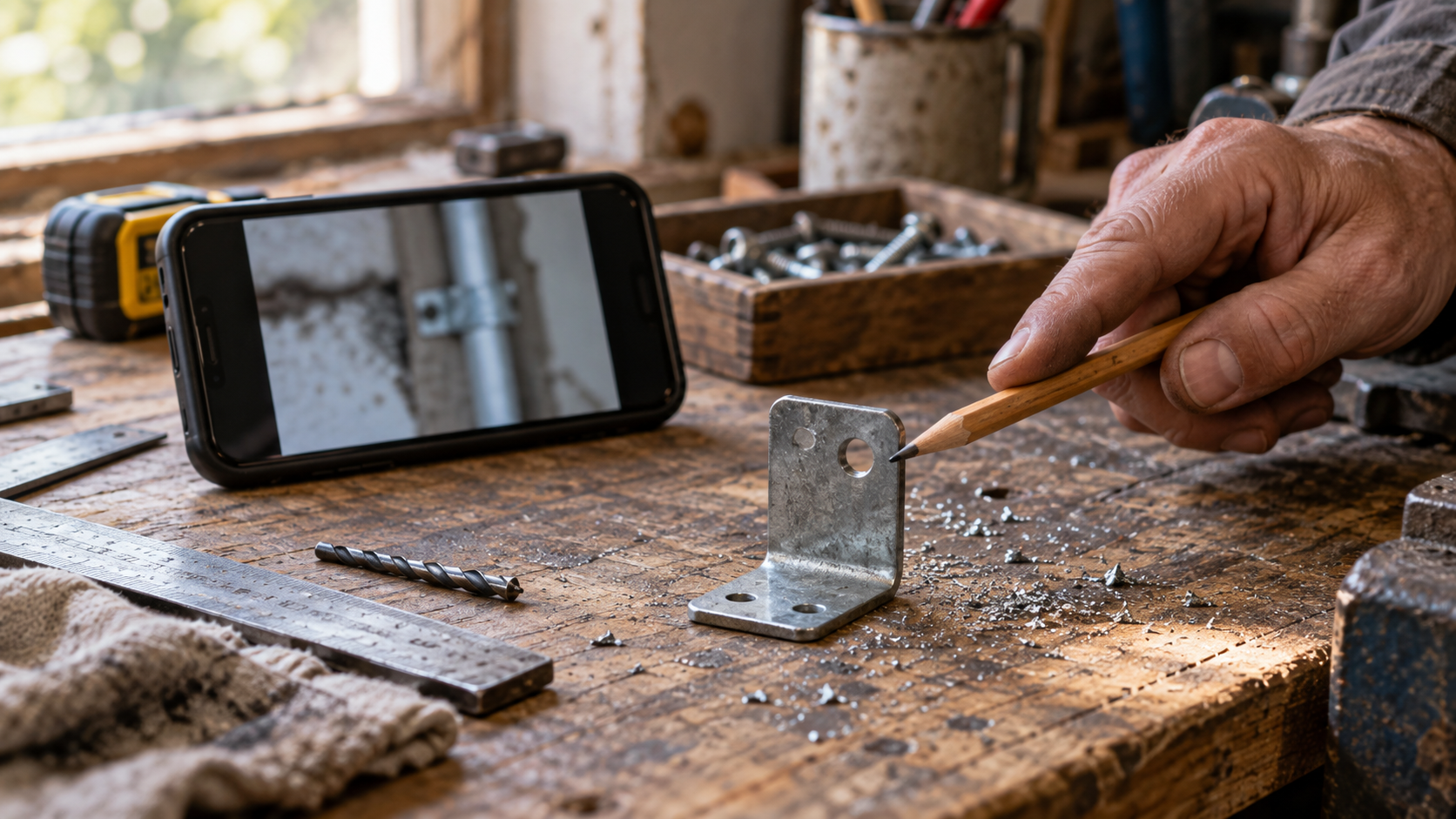
There was a bracket on the desk. Next to it was a photograph so blurry it could have been a bracket, a biscuit or evidence of a minor haunting.
“That's what they've sent,” said the person who actually understood the product.
I had been looking at the specification page. Neat table. Dimensions. Material. Several reassuring numbers. It had the sort of tidy confidence I wish I possessed before my first coffee.
The photograph was much less tidy. So was the customer's question: would this work on the thing they already had?
I couldn't answer. The colleague couldn't answer from that picture either. But he knew what to ask next. Was the mounting surface flat? Had the old assembly been altered? Could they send a picture from the side, with the connection visible?
Three questions. No dramatic diagnostic journey. Just three questions that moved the conversation somewhere.
That's the bit I wish more specification pages understood.
We get hung up on completeness. Every measurement, every finish, every abbreviation in the catalogue. Fair enough; missing a decisive measurement is a pain in the arse. But completeness also means helping a person recognise where the standard information stops being enough.
A reader with a settled requirement can use the table and get on with their day. A reader with a strange existing setup needs a different invitation. “Contact us” technically provides one, in the same way that “go somewhere” provides directions.
“Not sure about the mounting surface? Send a side-on photograph showing the connection” is considerably better.
It also saves the receiving team from an opening message that says, “Hello, I have a question.” Lovely. About which of the nine hundred products?
I am not suggesting marketing people start deciding what fits machinery. Please let the people who know the machinery make that call. I am suggesting we ask them what useful uncertainty looks like, then put that on the bloody page.
After the bracket discussion, I rewrote a prompt. Not the whole website. Not a revolutionary new enquiry experience. A prompt beside a table, asking for the detail somebody needed.
The glamorous work, obviously.
There is a small pleasure in seeing a message arrive with enough information for a proper first reply. No five-email treasure hunt. No customer repeating their situation to three people. Just a question that can actually be answered.
The blurry photograph stayed blurry. Some problems are beyond advertising. At least the next photograph had a chance of showing the right bit.
A thought worth keeping?